


Chillier Temperatures Throughout Florida Will Prompt Multi-family Wildlife Move-ins
As autumn transitions into early winter across the Sunshine State, Floridians are finally experiencing the seasonal relief they’ve been waiting for. Crisp morning breezes, lower humidity, and noticeable dips in evening temperatures are sweeping through every major metropolitan region. While human residents welcome this break from summer’s relentless humidity, the shift signals an urgent migration event for Florida’s native wildlife seeking warm, sheltered harborage.
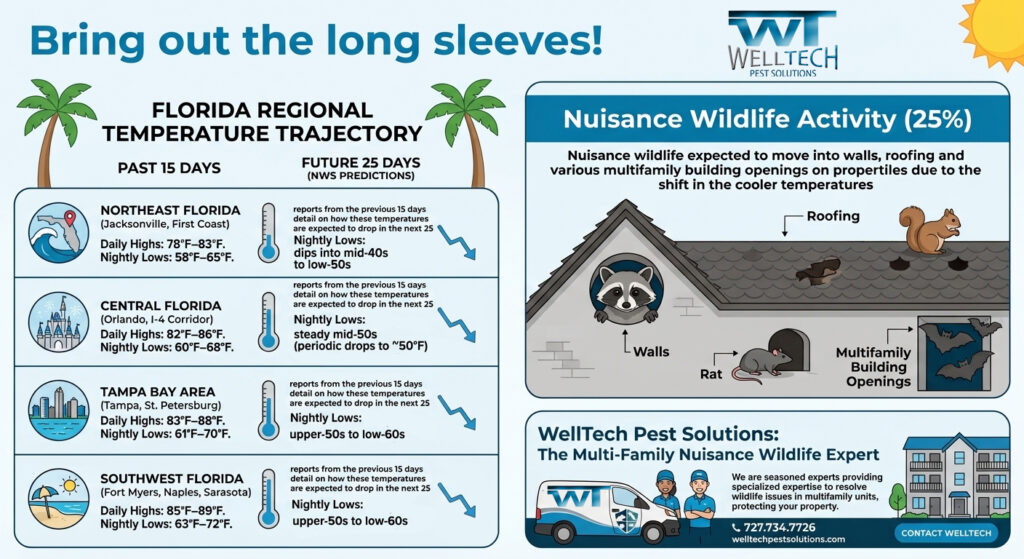
Seasonal Cool Fronts Arrive Across Florida
Over the past 15 days, a succession of mild cold fronts has steadily pulled temperatures down across Florida’s key geographic regions.
- Northeast Florida (Jacksonville & First Coast): Taking the brunt of early seasonal air masses, the Jacksonville area recorded daytime highs fluctuating between 78°F and 83°F over the past two weeks, with overnight lows dipping to a refreshing 58°F to 65°F.
- Central Florida (Orlando & I-4 Corridor): Central Florida enjoyed highs between 82°F and 86°F, while night temperatures settled into a comfortable range of 60°F to 68°F.
- Tampa Bay Area: Coastal moderation kept Tampa Bay slightly warmer, recording highs from 83°F to 88°F and overnight lows dropping between 61°F and 70°F.
- Southwest Florida (Fort Myers, Naples & Sarasota): Trailing slightly behind northern fronts, Southwest Florida logged daily highs ranging from 85°F to 89°F, with evening lows tapering into the 63°F to 72°F range.
NWS Outlook: The Next 25 Days
According to upcoming extended meteorological models and long-range advisories from the National Weather Service (NWS), Florida is set to experience a series of stronger, reinforcing cold fronts. Over the next 25 days, average temperatures across all four regions are projected to drop another 5 to 10 degrees.
- Northeast Florida will likely see morning lows regularly dipping into the mid-40s to low-50s.
- Central Florida overnight lows are expected to settle into the mid-50s, with isolated rural pockets touching 50°F.
- Tampa Bay and Southwest Florida will experience sustained morning temperatures in the upper-50s to low-60s, accompanied by significantly diminished dew points.
The Nuisance Wildlife Invasion in Multi-Family Communities
While these lower temperatures make outdoor living enjoyable for residents, they trigger a biological instinct in local wildlife to seek secure, heated shelter. In multi-family communities, such as apartment complexes, condominiums, and townhome developments, density and complex construction offer ideal environments for opportunistic pests.
As external temperatures drop, nuisance wildlife actively exploit structural vulnerabilities across multi-family properties:
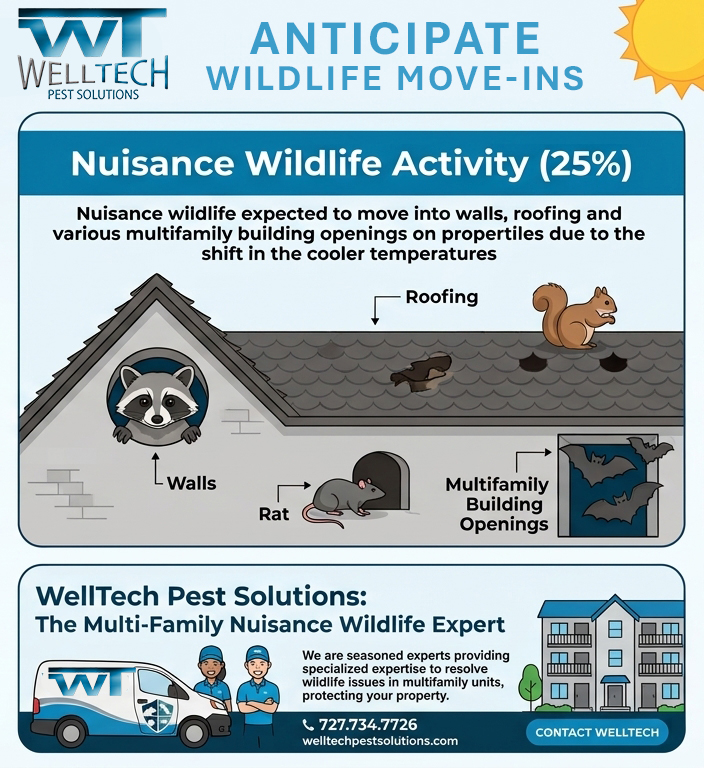
1. Wall Cavities & Chase Vents
- Roof Rats & Mice: Capable of squeezing through openings as small as a dime, rodents climb building siding and pipe chases to reach interior wall voids. Once inside, they gnaw through structural wiring, destroy insulation, and create severe fire hazards.
- Bats: Seeking stable microclimates, protected bat species attempt to squeeze into wall gaps, stairwell soffits, and building expansion joints.
2. Roofing Systems, Eaves & Soffits
- Squirrels (Eastern Gray & Flying): Squirrels aggressively chew through softened fascia boards, plastic roof vents, and unsealed soffit intersections to establish winter dreys (nesting sites) inside attic spaces.
- Raccoons: Strong and persistent, raccoons routinely tear open ridge caps, soffit panels, and attic louvers to establish denning sites for upcoming litters, causing extensive damage to HVAC ductwork and ceiling drywall.
3. Breezeways, Utility Penetrations & Foundations
- Opossums: Drawn to the warmth of sub-flooring, ground-level utility penetrations, and open breezeway voids, opossums enter lower-level wall gaps, leaving behind flea infestations and significant sanitation concerns.
In multi-family environments, a single wildlife intrusion quickly translates into multi-unit noise complaints, tenant turnover, structural property damage, and heightened health liabilities.
WellTech Pest Solutions: Florida’s Multi-Family Wildlife Experts
Managing wildlife threats across expansive multi-family portfolios requires specialized commercial expertise, not generic residential trapping. WellTech Pest Solutions is Florida’s dedicated leader in commercial multi-family pest and nuisance wildlife management.
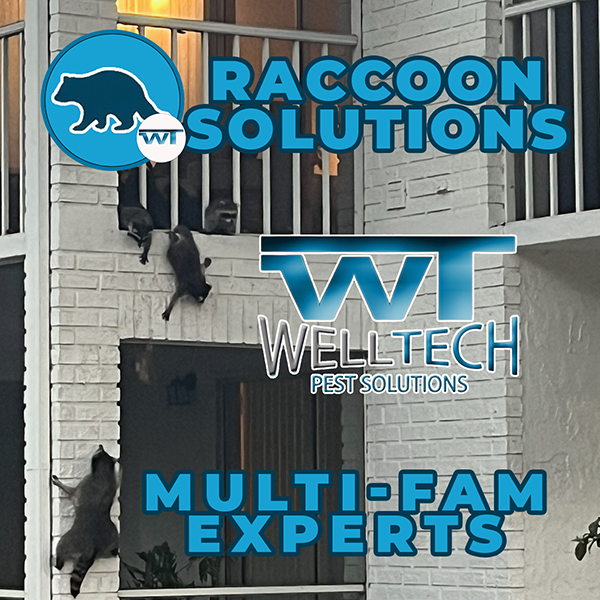
WellTech Pest Solutions provides property managers, asset directors, and regional executives with tailored, long-term protection against seasonal wildlife invasions:
- Customized Structural Exclusion: WellTech doesn’t just catch intruding animals; we secure the building perimeter. Our team installs heavy-gauge, weather-resistant exclusion materials across rooflines, soffit joints, breezeway voids, and foundation vents to prevent future entry.
- Humane & Compliant Relocation: WellTech adheres strictly to state wildlife regulations and seasonal protection guidelines (including bat exclusion windows and protected species handling) to ensure your property stays fully compliant while resolving animal conflicts safely.
- Attic & Void Sanitation: Following animal removal, our technicians perform targeted decontamination and insulation remediation to eliminate biological hazards, pheromone trails, and offensive odors.
- Multi-Family Focused Logistics: Designed specifically for multi-tenant environments, WellTech coordinates seamlessly with onsite leasing staff and maintenance crews to deliver discreet, professional, and efficient service that protects both your physical asset and your resident experience.
Don’t wait for cooler autumn nights to turn your multi-family rooflines and wall cavities into winter wildlife shelters. Partner with WellTech Pest Solutions today to schedule a multi-family structural vulnerability audit and safeguard your communities all season long.

