
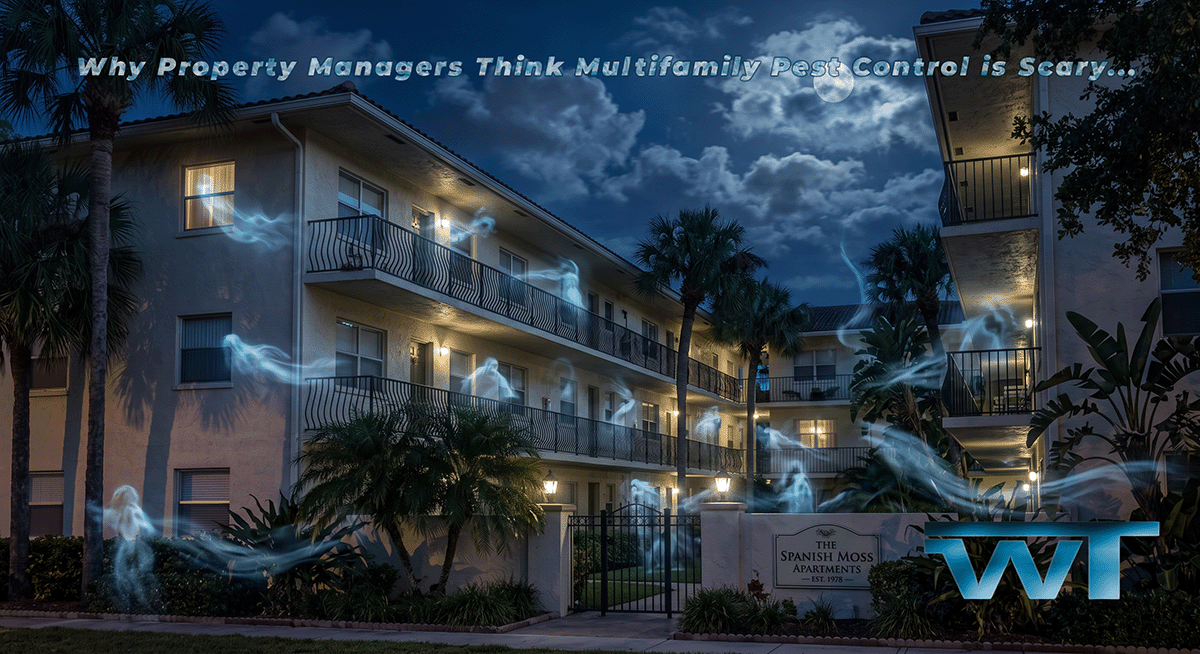
The Terrifying Scenario of the Wrong Multi-family Pest Control Partner
If you ask a property manager what keeps them awake at 3:00 AM, they may at first hesitate. Scariness doesn’t come in the form of budget reconciliations or leaky faucets. They will look you in the eye, lower their voice, and whisper a single, chilling phrase: A resident found a bat in the hallway.
Halloween is the season for haunted houses, creaking floorboards, and fake cobwebs. But for property managers overseeing multi-family residential communities, every day can feel like a scary double-feature. What lurks underneath the bed is usually a pest that brought twenty-five of its closest relatives.
Managing pest control across a sprawling apartment community isn’t like treating a single-family house. When structures share walls, attics, and plumbing lines, a single infestation isn’t just an inconvenience; it’s an outbreak.
The financial loss of losing residents, price slashing of monthly leases, and disgruntled residents providing word-of-mouth-experience and social media posts should send chills throughout any property manager. It should be a terrifying scenario for regional managers and property management companies, too. Ultimately, choosing the wrong pest partner could cause a property an untimely demise.
The Phantom Menace: Shared Walls, Shared Terror
The true nightmare of multi-family housing lies in the architecture itself. Apartments and condominiums are complex networks of shared walls, interconnected drop ceilings, continuous utility chases, and sprawling attic spaces.
Pests do not respect lease agreements or unit boundaries.
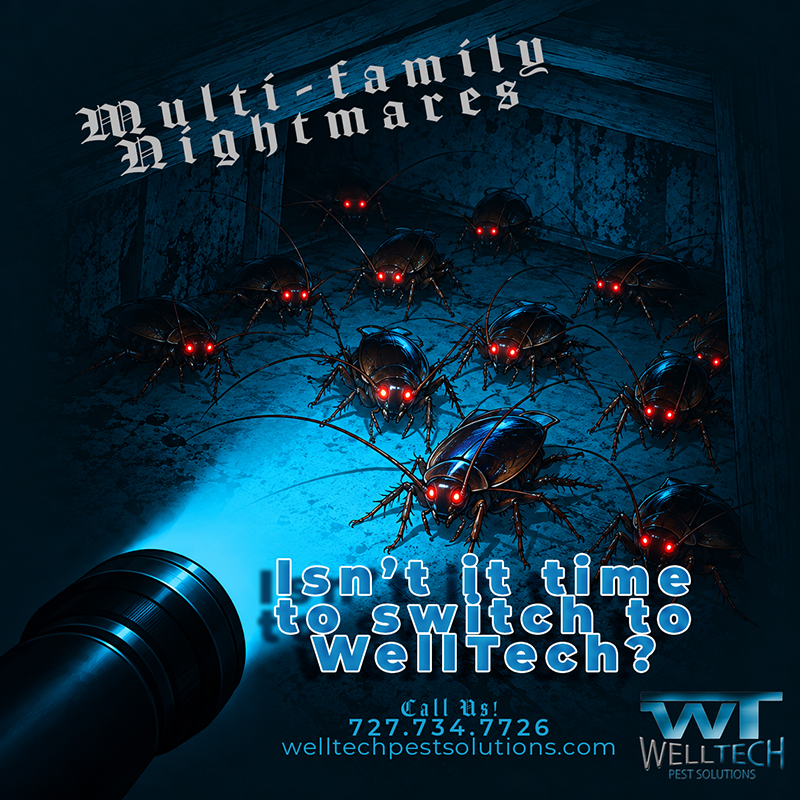
- German Cockroaches: These nocturnal invaders are the phantom stalkers of multi-family units. When one resident leaves out dirty dishes, the roaches don’t stay put. They travel right through the electrical outlets and wall voids to the unit next door, scuttling across kitchen counters while the neighbors sleep.
- Bed Bugs: Like a ghost passing through solid walls, bed bugs hitchhike from unit to unit via shared hallway carpets, laundry facilities, and common wall outlets.
- Subterranean & Drywood Termites: Silent destroyers working from within the dark, hidden wooden frameworks. By the time a property manager sees swarmer wings littered along a windowsill, the silent horde has already been chewing away at structural support beams for months.
When you manage hundreds of residents living shoulder-to-shoulder, a single untreated unit acts as an engine, constantly pumping pests into surrounding apartments.
A Spooky Cast of Characters: From Candy Lovers to Attic Lurkers
Halloween brings trick-or-treaters in costume, but the local wildlife and insect population is trick-or-treating around your property 365 days a year, and they have a serious sweet tooth!
The Sweet-Tooth Monsters
Kids aren’t the only ones raiding Halloween stash. Several common pests will happily turn an apartment pantry into their own personal candy kingdom:
- Ants: Odorous house ants and Argentine ants will march in military precision straight toward a dropped candy corn, a wrapper smeared with chocolate, or a forgotten can of soda. Once a scout finds a sugary treasure, it leaves a chemical trail, summoning thousands of phantom invaders overnight.
- Roaches: Cockroaches are opportunistic scavengers with a massive craving for sugar and starches. A spilled box of Halloween sweets behind a refrigerator is the equivalent of a five-star buffet for a growing roach colony.
The Creepy Crawlies & Bloodsuckers
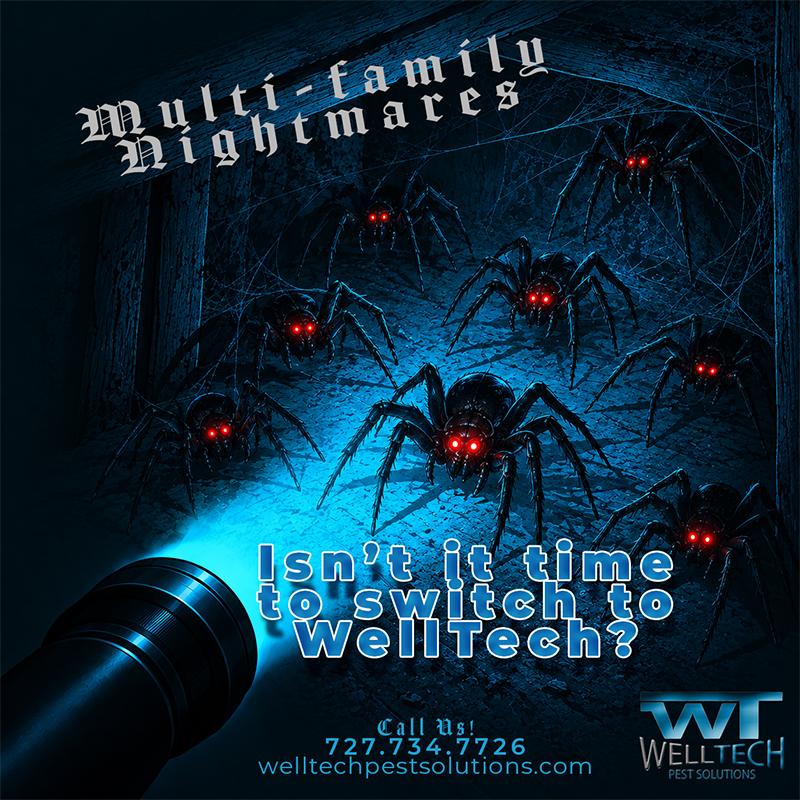
- Spiders: While fake cobwebs decorate front doors in October, real spiders build massive webs across breezeways, light fixtures, and patio doors, greeting residents face-first when they walk out for their morning coffee.
- Mosquitoes: Turning an evening stroll through the community courtyard into a nightmare. Breeding in standing water trapped in clogged gutters, decorative fountains, or over-irrigated lawn patches, mosquitoes hunt residents relentless for a blood meal.
The Creatures of the Night
When night falls, bigger critters take over the stage:
- Bats: Swooping down breezeways or squeezing into tiny 1/4-inch gaps near the roofline, bat colonies can turn an attic into a noisy, odorous nightmare.
- Squirrels: Cute in the park, but inside a multi-family roofline, they are furry chainsaw-toothed menaces that gnaw through electrical wiring, creating real fire hazards.
- Raccoons & Opossums: The ultimate dumpster divers. Raccoons will pop dumpster lids like trash cans at a carnival, while opossums hiss from under breezeway stairwells, terrifying residents taking out the evening garbage.
Unholy Entryways: How Pests Invade
How do these creatures get inside? They don’t knock on the front door. They use the hidden gateways every multi-family property possesses:
- Roofline & Soffit Gaps: Wildlife like squirrels, raccoons, and bats exploit rotted fascia boards or unsealed soffit vents to move straight into shared attic spaces.
- Utility Penetrations: Unsealed gaps around plumbing lines, gas pipes, and HVAC conduits beneath sinks or behind water heaters act as expressways for roaches and mice between units.
- Door Sweeps & Window Screens: Torn mesh or missing weather stripping at ground-level doors welcome ants, spiders, and snakes right into air-conditioned units.
- Breezeway Trash Valet Bags: Stowing trash bags on doorsteps hours before pickup creates a moonlit banquet for roaches, ants, raccoons, and opossums right outside resident front doors.
Nightmare on Elm Street: The Wrong Pest Company Scenario
To understand why property managers get grey hair, consider this classic horror story:
Imagine a 200-unit garden-style community called Hallow Screams Place. The property manager, trying to trim the annual budget, hires a budget pest control vendor, one that primarily services single-family homes and doesn’t understand multi-family dynamics.
A resident in Unit 104 reports a heavy cockroach issue. The inexperienced technician drives up, sprays a quick perimeter band inside Unit 104’s kitchen, leaves a sticky trap, and leaves.
Big mistake.
The aggressive spray repels the roaches, driving them out of Unit 104—straight up through the wall voids into Units 204, 203, and 105! Within two weeks, what was a localized issue in one kitchen has turned into an eight-unit infestation.
Unaware of how the shared structure functions, the vendor treats each new complaint as an isolated incident, spraying unit by unit in a frantic game of “Whack-A-Mole.”
Meanwhile, raccoons have torn open a roof vent over Block B. The vendor sets a trap on the ground, missing the fact that the raccoons have already established a nest in the shared attic space spanning six apartments.
The result?
- Dozens of furious online reviews detailing “bug-infested apartments.”
- Escrowed rent checks from panicked tenants.
- Terrified residents calling the leasing office screaming because a raccoon fell through a bathroom ceiling light fixture into a bathtub.
- Resident retention plummets, turnover costs skyrocket, and the property manager is left dealing with a full-blown public relations horror story.
Exorcising the Demons: A Happy Ending
Multi-family pest management requires a specialized strategy: comprehensive block treatments, systematic exclusion work along rooflines and utility entries, proactive resident communication, and an understanding that treating one unit means accounting for all surrounding units.
When a property manager partners with an experienced multi-family pest specialist, the monsters are pushed back into the shadows. The attics stay quiet, the hallways stay clear, the Halloween candy stays safely inside its wrappers, and property managers can finally sleep soundly through the night.
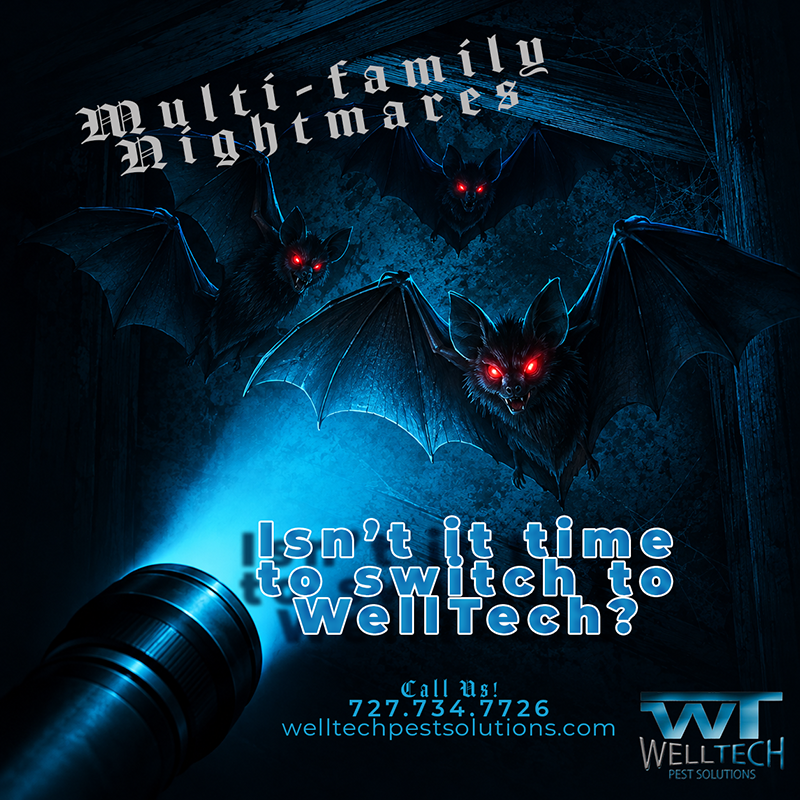
By using strategic integrated pest management through WellTech Pest Solutions, pests are controlled where they are located and prevent pests from fleeing to other units. Property exterior inspections and exclusion bids from WellTech Pest Solutions also helps your property create an action plan from those scurrying and fluttering nuisances in your property walls and attics. Want to know more about how to partner with us?
Call us or fill out the form below. We don’t bite!
General Pest
Bat Removal and Exclusions