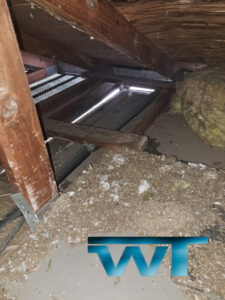


The Greatest Concentration of Florida Bats?
The distribution of Florida’s estimated 13 resident bat species presents a unique pattern when evaluated through the lens of structural roosting in multi-family residential properties.
Data compiled from research by the University of Florida Institute of Food and Agricultural Sciences (UF/IFAS), the Florida Fish and Wildlife Conservation Commission (FWC), and wildlife monitoring records spanning from 2014 to 2026 reveal how urbanization, multi-story structural architecture, and microclimates influence bat concentrations across central and north-central Florida.
Regional Concentration of Bats in Multi-Family Properties
Government and university acoustic and roost-monitoring surveys indicate that bats in urban and suburban landscapes do not spread evenly. Multi-family developments, characterized by multi-tiered rooflines, expansive barrel-tile roofing, concrete soffit voids, open attic spaces, and continuous breezeways, provide ideal thermal conditions and elevated entry points for colonial roosting.
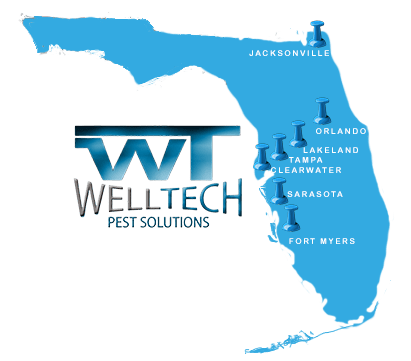
1. Central Florida Urban & Suburban Corridor (42% Concentration)
- Primary Roost Profile: High-density apartment complexes, multi-story residential developments, barrel-tile multi-family roof structures.
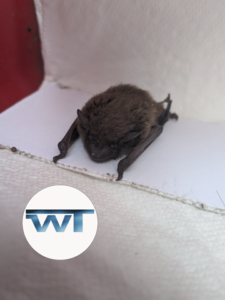
This region represents the single highest concentration of urban bat activity in multi-family structures in the state. Urban expansion around the Greater Orlando and Tampa Bay metropolitan areas has altered natural roosting habitats. Consequently, maternity colonies of Brazilian free-tailed bats have adapted to human-made structures.
Multi-family properties in Orange, Hillsborough, and Polk counties frequently experience large-scale roosting due to extensive roof surfaces, tile coverings, and elevated gables near artificial retention ponds, which provide rich feeding grounds for flying insects.
2. North-Central Karst & Agricultural Belt (31% Concentration)
- Primary Roost Profile: Low-to-mid-rise multi-family housing, agrarian worker housing, historic multi-unit dwellings.
The presence of natural cave networks, spring basins, and agricultural lands makes this zone a biological stronghold for species like the southeastern myotis. However, as multi-family developments expand near rural edges, bats frequently cross over into structural roosts. High humidity and rich insect populations around Marion, Citrus, and Levy counties drive maternity colonies into soffits, expansion joints, and chimney chases of multi-family buildings.
3. Coastal & St. Johns River Basin Region (27% Concentration)
- Primary Roost Profile: Coastal condominium complexes, multi-story coastal townhomes, elevated multi-family framing.
In coastal and riverine counties, bat activity in multi-family housing is heavily influenced by proximity to freshwater basins, coastal marshes, and major river corridors. Multi-family coastal structures, especially those with stucco construction, open soffit vents, or Spanish tile roofs, offer bats high-elevation landing perches sheltered from severe coastal wind events.
Highest Concentration Zone: 2014 to 2026 Focus
During the monitoring period spanning 2014 to 2026, the absolute highest structural concentration of bat populations in multi-family properties occurred in the Orange–Hillsborough–Polk Tri-County Urban Axis.
UF/IFAS and FWC research attributes this concentration peak to three specific factors:
- Rapid Multi-Family Construction: High rates of multi-family housing construction created thousands of expansion joints, roof voids, and tile gap entries favored by crevice-seeking bats.
- Thermal Advantage: Multi-family attics maintain warmer; stable temperatures required for maternity colonies raising flightless pups between spring and summer.
- Foraging Proximity: High densities of stormwater management ponds within multi-family complexes generate concentrated populations of aquatic insects, reducing forage travel distance for bats.

Why Florida Bats Are Protected
Under Florida Administrative Code Rule 68A-4.001 and Rule 68A-9.010, all bat species in Florida are strictly protected by law.
The key reasons for their legal protection include:
- Ecological Insect Control: A single bat can consume hundreds to thousands of flying insects, including mosquitoes, beetles, and moths, every night. This natural pest management saves Florida’s agricultural sector millions of dollars annually and controls insect populations near residential zones.
- Maternity Vulnerability: Female bats aggregate in large maternity colonies to give birth to only one pup per year. Blocking access to a roost while flightless young are inside leads to pup mortality and rapid localized population collapse.
- Conservation Status: Several Florida species, such as the Florida bonneted bat (Eumops floridanus), are federally listed as endangered due to severe habitat loss.
Because of these protections, multi-family property owners and managers are required by state law to strictly follow established FWC exclusion protocols outside of the official maternity window.
WellTech Pest Solutions is knowledgeable and trained to properly manage bats in multi-family properties. The timeframe to begin this process is this Saturday August 15th. Contact WellTech for more information.