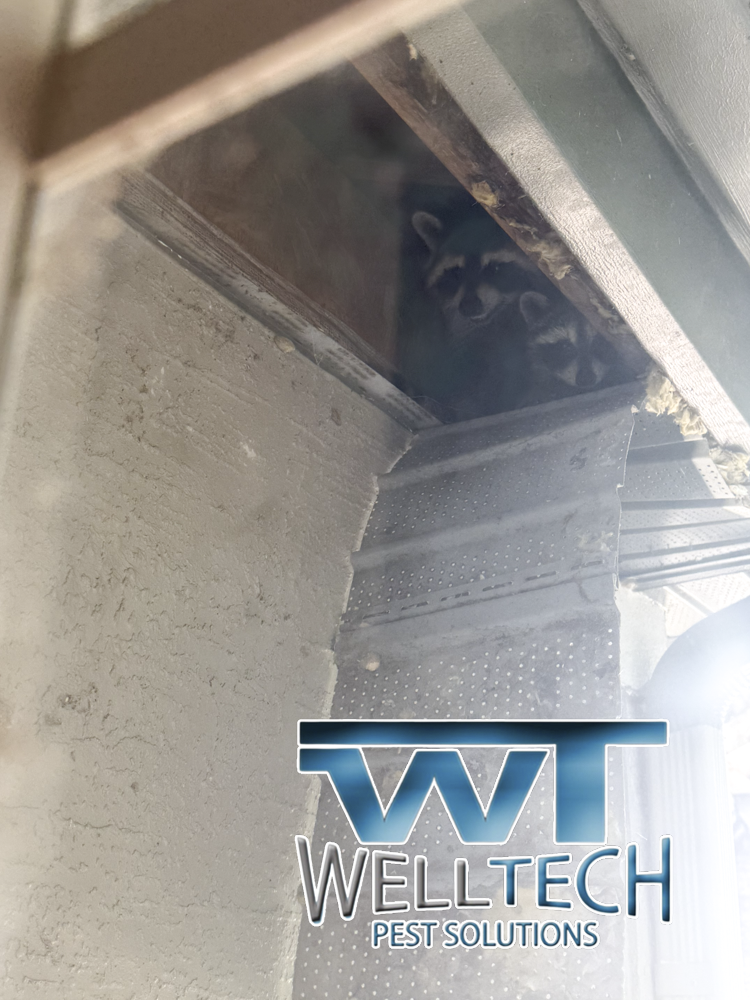
Florida Department of Health Issues String of Rabies Alerts Following Late-Summer Raccoon Encounters
TALLAHASSEE, Fla. — Throughout August and September 2026, the Florida Department of Health (DOH) has actively monitored and issued localized advisories regarding rabies cases in the state’s wild raccoon population. Recent positive tests across major metropolitan areas, including Jacksonville, Orlando, Tampa Bay, and the Gainesville region, have prompted health officials to urge residents to exercise caution and avoid interactions with stray and wild animals.
Regional 2026 Rabies Updates
Health departments across Florida have confirmed multiple rabid raccoons during the late summer months:
- Jacksonville Area: In St. Johns County, health officials issued a rabies warning in early September after a raccoon, killed on August 28 in the St. Augustine South neighborhood near U.S. 1, tested positive for the virus.
- Orlando Area: The DOH in Seminole County issued a 60-day rabies alert on August 14 following the capture of a rabid raccoon in the Tuskawilla community of Winter Springs. Additionally, a similar alert was issued on September 3 in Brevard County after a confirmed case was captured in Melbourne.
- Gainesville Area: The DOH in Marion County, located just south of Gainesville, issued a rabies advisory in late July after a raccoon was killed in Reddick near U.S. Route 441.
- Tampa Bay Area: Health officials in Pasco County issued a rabies advisory in June response to two confirmed cases of rabid raccoons on the east side of the county.
The Risk to Families in Multi-Family Properties
Wildlife nuisance issues present distinct risks for families living in multi-family properties. High-density residential environments inherently feature shared outdoor amenities, communal trash receptacles, and outdoor pet stations. These areas often provide easily accessible food sources that draw raccoons out of their natural habitats and into close proximity with humans. When raccoons acclimate to multi-family properties, families face a heightened risk of unexpected encounters in parking lots, near breezeways, or at community playgrounds.
Property Manager Action Plan: Resident Education
Property managers must take proactive steps to educate residents on mitigating wildlife interactions and understanding disease risks. A comprehensive communication strategy should include specific guidance on the illnesses raccoons carry and the community rules designed to prevent them:
- Disease Education: Residents must be informed that rabies is a potentially fatal viral disease transmitted through the bite or scratch of an infected animal. Managers should also educate residents about secondary health threats, such as leptospirosis and raccoon roundworm, which can be contracted from raccoon feces left in common areas.
- Pet Safety Requirements: Managers must mandate and remind residents to keep all cats and dogs immunized against rabies according to a veterinarian’s schedule. Pets must be supervised and kept on a leash at all times while on the property grounds to prevent dangerous interactions with wildlife.
- Waste Management: Educational flyers should emphasize the importance of not feeding wildlife . Residents must be strictly prohibited from leaving outdoor pet food on patios, as it unintentionally attracts wild animals, and must be instructed to ensure community garbage dumpsters are fully secured after use.
- Reporting Protocols: Management should clearly post contact information for local animal control agencies and the county health department. Residents must be instructed never to handle or adopt stray animals and to immediately report any unusual animal behavior—such as aggression, confusion, or decreased motor function—to property staff and local authorities
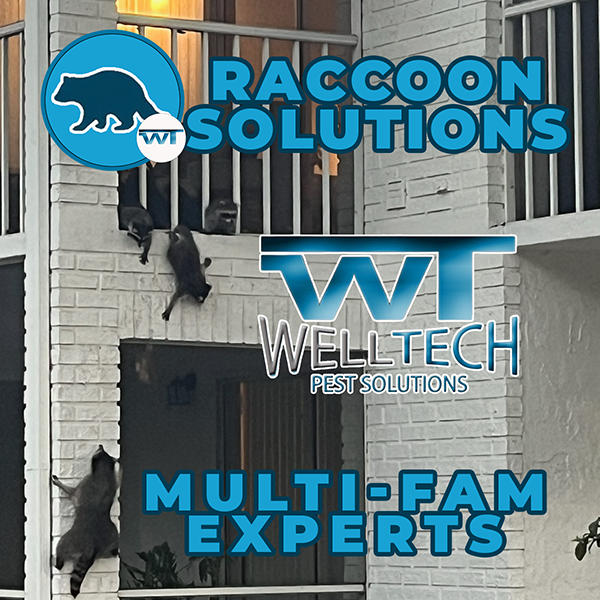
Removal and Exclusion of Raccoons and Other Potentially Hazardous Wildlife
WellTech Pest Solutions Wildlife Exclusions and Special Services Teams (WESS) can be dispatched onto your multifamily property to remove raccoons and other wildlife from your property. Welltech also provides a longer-term solution to prevent raccoons and other wildlife from finding easy accessibility. Our teams are background checked, trained on WellTech proprietary solutions, and are not subcontractors.
If you need our help, contact us and save ten percent off of your initial removal or exclusion service.