


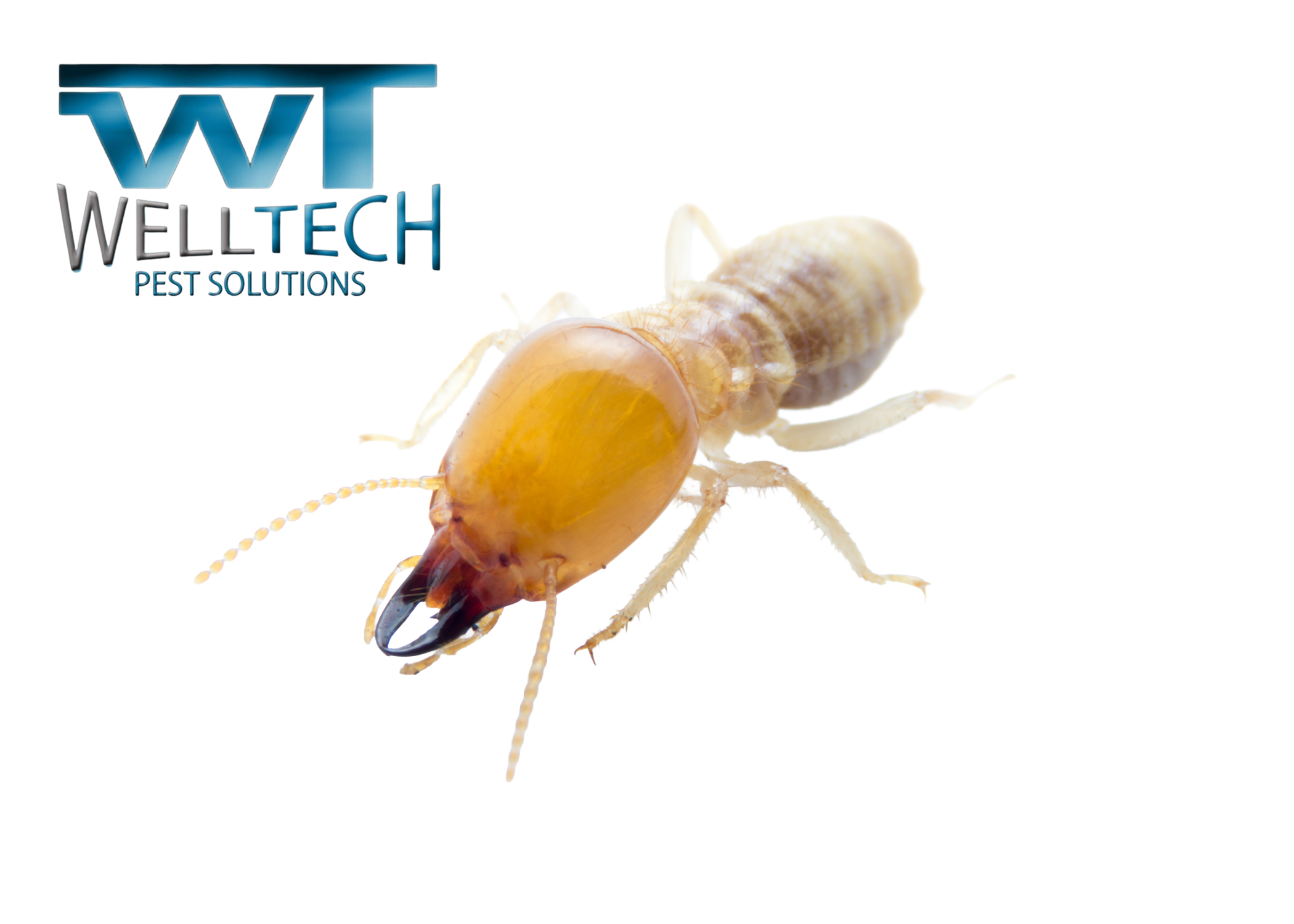

WellTech Pest readies for higher demand for inspections of wood-destroying organisms (WDO) and termite management services this year. Field technicians and pest control specialists have witnessed signs of another intense season and reminds multifamily properties that termite awareness should always be top-of-mind. This week marks Termite Awareness Week March 1–7, 2026.
Designated by the National Pest Management Association (NPMA) to educate homeowners and property managers, termites are the cause over five billion dollars in property damage annually in the United States alone.
Because of our unique subtropical climate, Florida is home to a “triple threat” of termite species, each with its own schedule, behavior, and level of destruction. Of the five billion dollars destroyed in the US, Florida accounts for a fifth. So, for property managers of multi-family properties, these figures are stunning enough to always be proactive when dealing with termites.
What Exactly is a “Swarm”?
To understand the danger of the reproductive intensity of the three heavy hitters of Florida, you must first understand their biology. A termite swarm is a colony’s way of expanding its empire. When a colony reaches a certain size and age, usually three-to-five years, it begins producing alates, or winged reproductive termites.
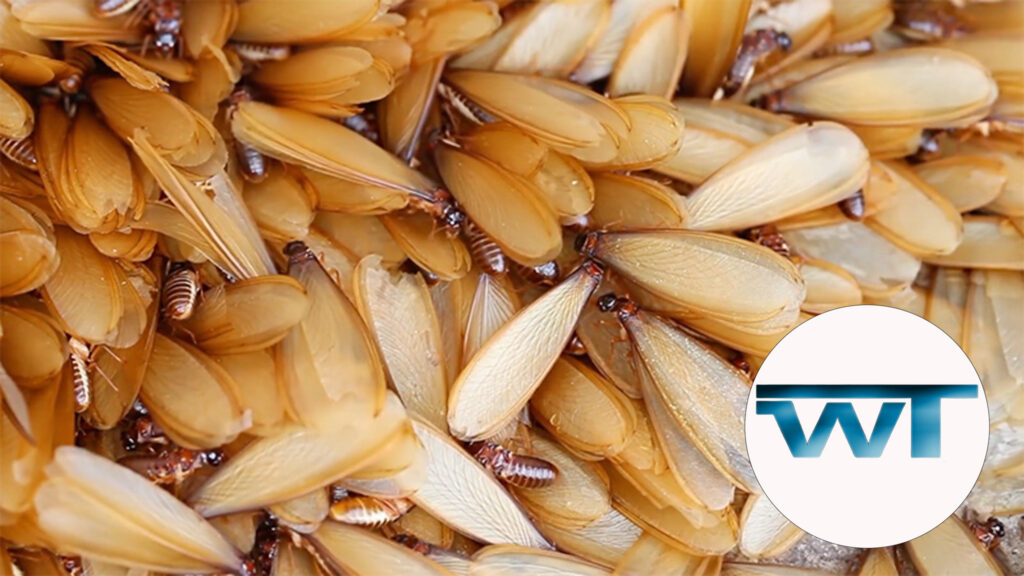
Unlike the pale, blind worker termites that spend their lives chewing through varieties of wood structures like an all-inclusive, all-you-can-eat-buffet; alates have functional eyes and two pairs of long, equal-length wings. They are the “princes” and “princesses” of the colony. When the temperature and humidity are precisely right, usually after a heavy spring rain, thousands of these alates emerge simultaneously. Their goal is simple: find a mate, shed their wings, and crawl into a crevice to start a brand-new colony.
If you are witnessing swarming, this is not a sign that your property has brand new termites. It is a sign that your property may already HAVE termites. Swarming is the process of increasing population! Contact WellTech for proper identification.
Defining the Three Primary Florida Termites
Florida is unique because it hosts three distinct types of termites that require very different management strategies. Identifying which one has arrived at your multi-family community is the first step in defense.
1. Native Subterranean Termites (Reticulitermes species)
These are the most common termites in North America. They live in large colonies underground and maintain a strict need for moisture. They bridge the gap between the soil and your properties’ wood structures by building “mud tubes”, which are pencil-thin tunnels made of soil and saliva.
- Swarming Time: Native Subterraneans are the “early birds.” In Florida, they begin swarming in mid-December and continue through mid-May.
- Behavior: They are primarily daytime swarmers. You will likely see them on bright, sunny days following a rain shower or thunderstorm.
2. Formosan Subterranean Termites (Coptotermes formosanus)
Known as the “Super Termite,” the Formosan is an invasive species that has devastated parts of the Southeast, particularly Florida and Louisiana. A single Formosan colony can contain several million members and consume up to a foot of 2×4 wood in a matter of weeks.
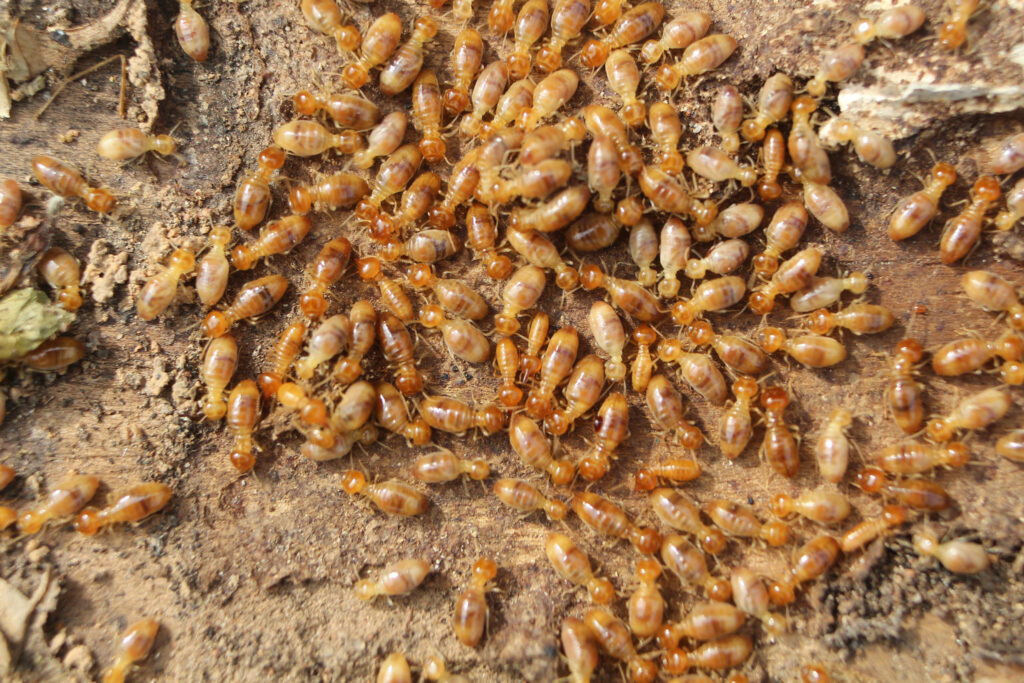
- Swarming Time: Their season kicks off later, typically from late April through June. However, with the right conditions, an earlier season is possible.
- Behavior: Formosans are nocturnal swarmers. They are highly attracted to light. It is common to see thousands of these termites swarming around streetlights.
3. Drywood Termites (Incisitermes and Cryptotermes species)
Unlike their subterranean cousins, Drywood termites do not need soil or a constant water source. They live entirely within the wood they consume. They are common in attics, window frames, and even expensive wooden furniture.
- Swarming Time: These termites prefer the heat of the summer, with peak activity from April through July, though they can swarm in smaller numbers year-round in South Florida.
- Behavior: They are secretive and produce smaller swarms than subterranean species. Their presence is often detected not by the swarm itself, but by the “frass” (fecal pellets) they kick out of their nests.
Identification: How to Tell Them Apart
Misidentifying a termite can lead to expensive treatment mistakes. During Termite Awareness Week, WellTech Pest Solutions emphasizes the importance of looking at the physical characteristics of the “swarmers” and the “soldiers.” We also emphasize the importance of identification, because not all termite management is the same. Contact WellTech Pest Solutions for a free no-obligation inspection at your multi-family community.
The Peak of the Storm: Why May is the “Danger Month”
While the swarming seasons overlap, data from Florida entomologists shows that May is the highest swarming month for all termites combined.
In May, the “early” native subterranean swarms are winding down, the Formosan “Super Termites” are at their nocturnal peak, and the Drywood termites are just beginning their summer offensive. This “perfect storm” of biological activity makes May the most common month to discover infestations. It is the time when hidden damage finally becomes visible to the naked eye. Being proactive is discovering termites BEFORE the swarming shows itself at your property.
The Battle of Eradication: Which is Hardest to Get Rid Of?
Not all termite treatments are created equal. The difficulty of eradication depends on whether you are fighting a logistical battle or a biological one.
The Logistical Nightmare: Drywood Termites
Drywood termites are arguably the most difficult to treat comprehensively. Many companies not familiar with the budgetary constraints of multi-family property management will recommend whole-structure fumigation, or “tenting”. This is a massive undertaking that requires the family, pets, and houseplants to vacate for three days while the home is filled with sulfuryl fluoride gas. How much will it cost your community building or buildings to be relocated for three days? Add the cost of the technicians and note that this is not a final death blow. Drywood termites are capable of returning or may find another building to experience wood-buffet-bliss. WellTech has an alternate, more affordable solution, which helped launch our company in Florida ten years ago. Contact us for more information.
The Biological Terror: Formosan Termites
While subterranean termites can often be managed with soil barriers or bait stations, the Formosan termite is the most difficult to stop. Their colonies are so large they can bypass chemical barriers through sheer numbers.
Even more challenging: Formosans can create aerial nests (called cartons). If they find a consistent moisture source, such as a leaky roof or a sweating AC pipe, they can survive entirely inside your walls without ever returning to the soil. This renders traditional ground-based liquid treatments and bait stations useless, requiring direct wood injection and structural repairs.
Protecting Your Multi-family Properties During Termite Awareness Week
As we observe Termite Awareness Week, the goal is prevention. Termites are a fact of life in Florida, but infested units, building structures or communities don’t have to be. Use this week to have a maintenance manager or yourself walk the perimeter of each building, check for mud tubes, and schedule a professional inspection before the May peak arrives.
Besides a free inspection, WellTech also offers education sessions for your community. Contact WellTech Pest Solutions, LLC to learn more about the steps we take to protect your multi-family property from termites.